I arrive at the airport in Guayaquil about two hours before departure, hoping that gives me enough time to get to the gate. Before checking in with the airline, first I have to wait at another counter to obtain a Transit Locater Card, and although I preregistered online, the line is slow. They seem dubious when I tell them I’ll be staying in Galápagos for two months, but eventually my paperwork all checks out to their satisfaction and I’m told to proceed to have my baggage checked for unauthorized materials (there are strict rules regarding the transport of any plant or animal matter into the archipelago). After inspection a tie is placed on the zippers of my checked suitcase to make sure nothing else is added, and after dropping it off at the airline counter I make my way through security and proceed to the gate.
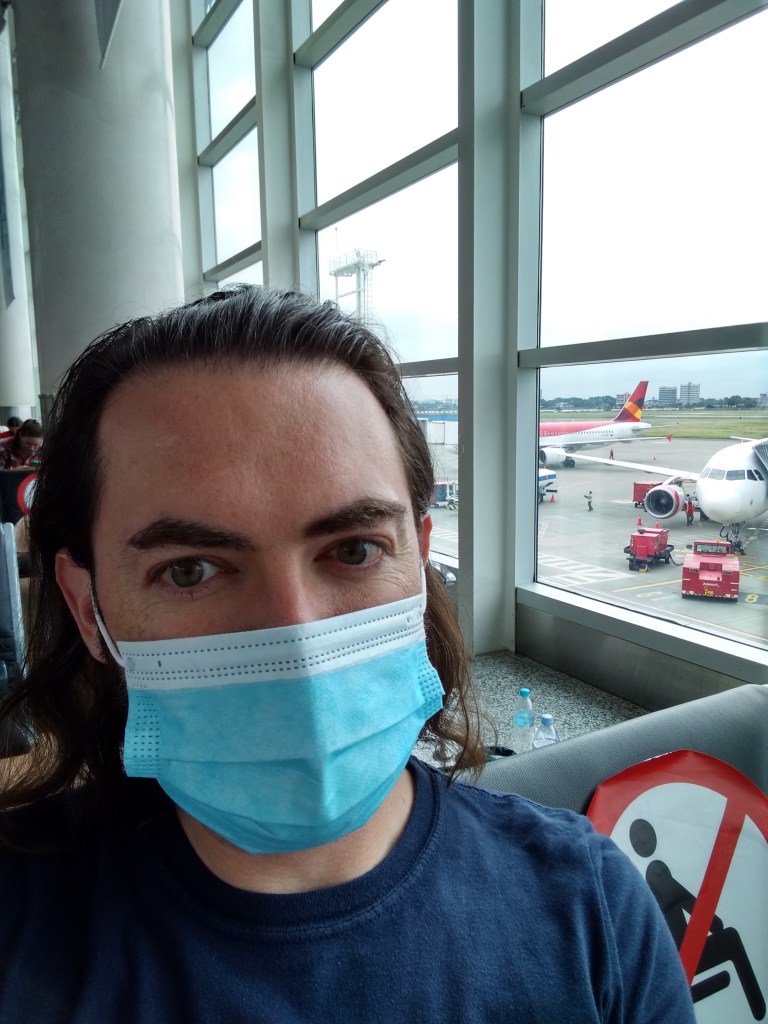
Once aboard the plane, a sense of anticipation and excitement begin to overwhelm me—I can hardly believe that in two hours I’ll be there. I’m tearing up already… I’m so going to be a mess when I land!
(Two hours later…)
I’m completely overwhelmed. This place is already like nothing I’ve ever seen…and I just got here! I’m glad I got to live to experience this.
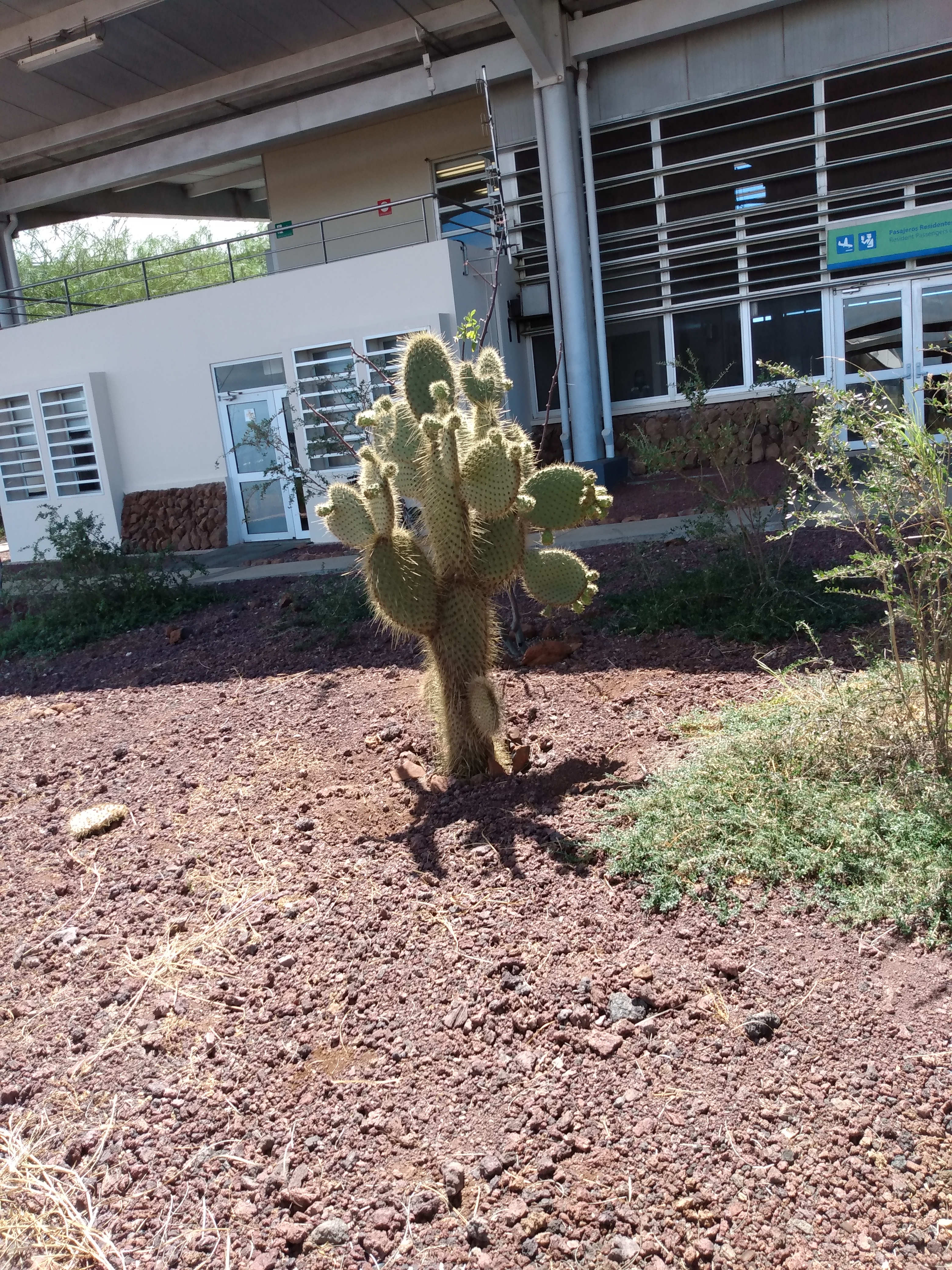
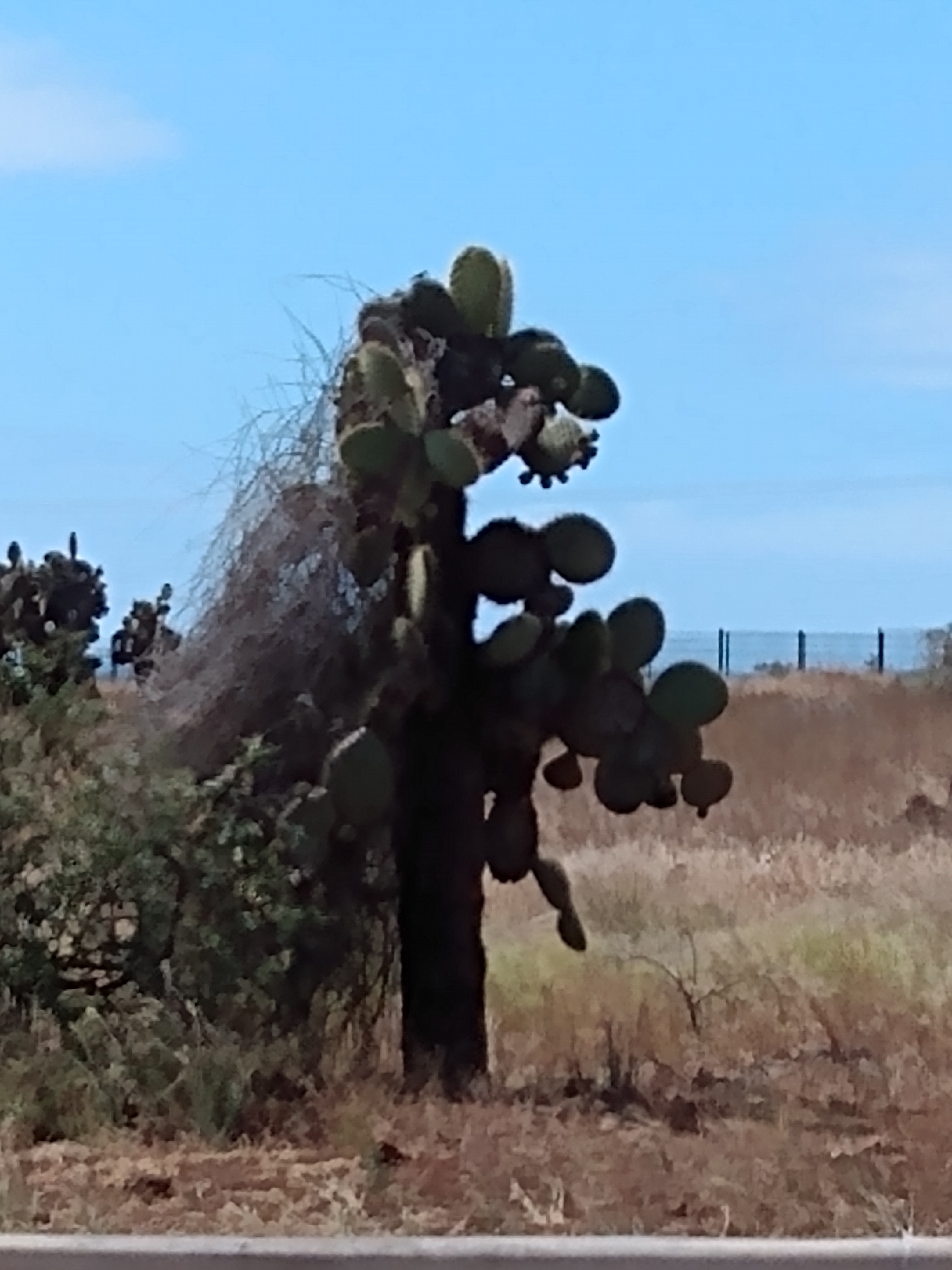
As we walk from the plane to the airport for another inspection, we are greeted by a few shaggy cacti. There are many more (and taller) cacti on the other islands, which the giant tortoises famously eat. On the bus from the airport to the ferry from Isla Baltra to Isla Santa Cruz, I overhear a father explaining to his young (maybe four-ish?) son, in response to his question about why they’re so tall, that they evolved that way because they didn’t want to get eaten—a reasonable answer to a child’s question, though technically the reasons are likely much more complex. There are tall cacti in other places (such as Curaçao, where I’ve just spent the previous month) without tortoises trying to eat them. In areas of more dense vegetation, they probably evolved their lofty height largely for the same reason many other plants do, in competition for sunlight and other resources. But in a striking case of convergent evolution, like trees and palms, they have evolved woody, lignin-dense trunks to provide structural support in order to have the ability to grow beyond a certain height, so the cacti here do provide lessons of evolutionary adaptation at many levels. And of course, the tortoises on the islands where the cacti are a staple of their diet did evolve their saddle-shaped shells and longer necks in order to be able to reach the higher foliage (like giraffes in the African savannas), so there is also a spiraling interaction of evolutionary selective pressures between flora and fauna here as well.
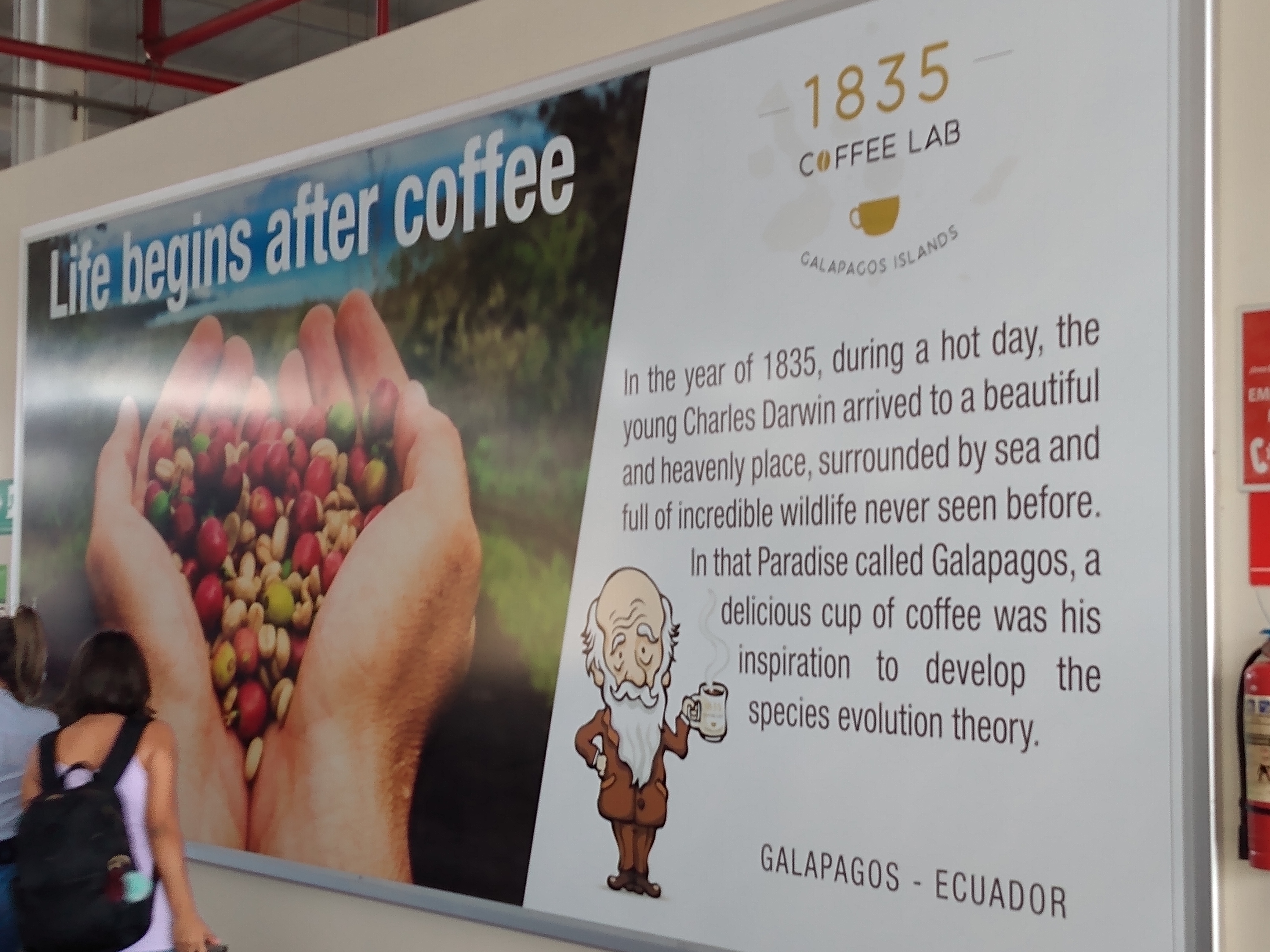
In line for inspection at the airport, we’re also greeted by a large sign on the wall declaring that “Life begins after coffee”, which goes on to explain that when Darwin arrived in “that Paradise called Galapagos, a delicious cup of coffee was his inspiration to develop the species evolution theory.” I’m not sure this is entirely accurate (the accompanying stereotypical image of him as a white-haired, long-bearded old man certainly isn’t), but it is only the first of many inaccuracies about Darwin I will encounter while in Galápagos, and not even the only coffee-related one!
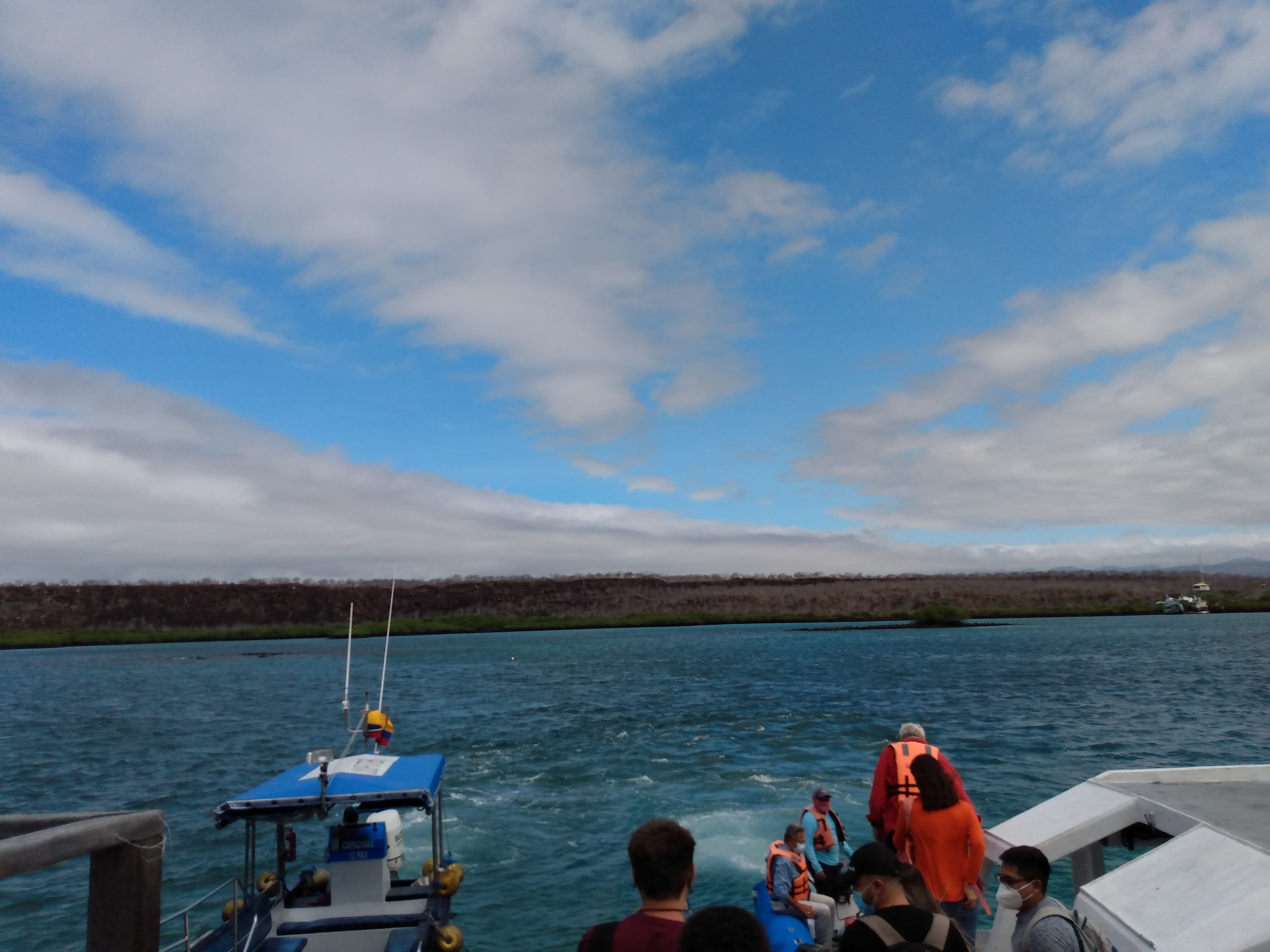
I’m pleasantly surprised to have decent cellular service here, though it does drop out during the bus ride from the ferry to the town of Puerto Ayora on the southern coast of Santa Cruz as we traverse the island’s highlands. I’m anxious to see what the internet access situation is like in town, as I’m supposed to have a couple of Zoom meetings that evening after I arrive. But for now I just enjoy the ride. I’m struck by the enormous variance not only between these first two islands that I’ve seen, but even within Santa Cruz itself between the coasts and highlands and from north to south. While Baltra was arid with sparse vegetation—mostly scrub and the (relatively) short, shaggy cacti noted above—while just a short ferry ride away (during which I saw birds diving for fish in the narrow channel) this island, especially in the highlands, looks more like a rainforest, vibrantly green with an incredible variety of densely-packed vegetation, including the tallest cacti I’ve ever seen (and some of those in Curaçao easily reached twenty feet). I don’t see many wild animals here on land yet, though along a stretch of the main road we pass tortoise crossing signs every few kilometers. As we leave the protected national park area and into the populated part of the island approaching town, I do see some domesticated animals, including horses, cows, and dogs, somewhat to my surprise as I knew there were no large mammals indigenous to the archipelago…evidently several have been introduced, and some that have become feral (such as goats) are now considered invasive species that threaten the native ecosystem and active measures are being taken to eradicate or at least control their populations on some of the islands.
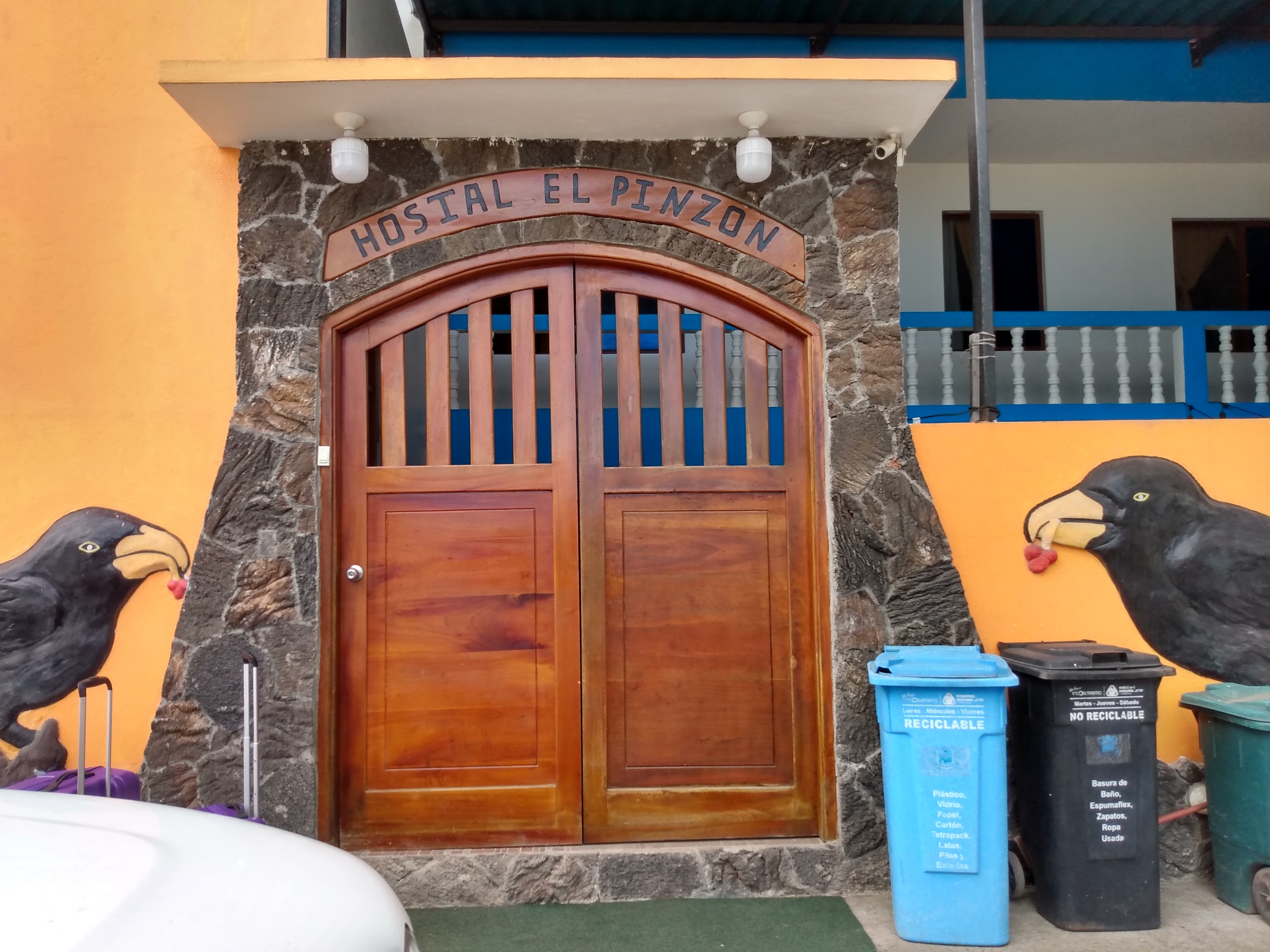
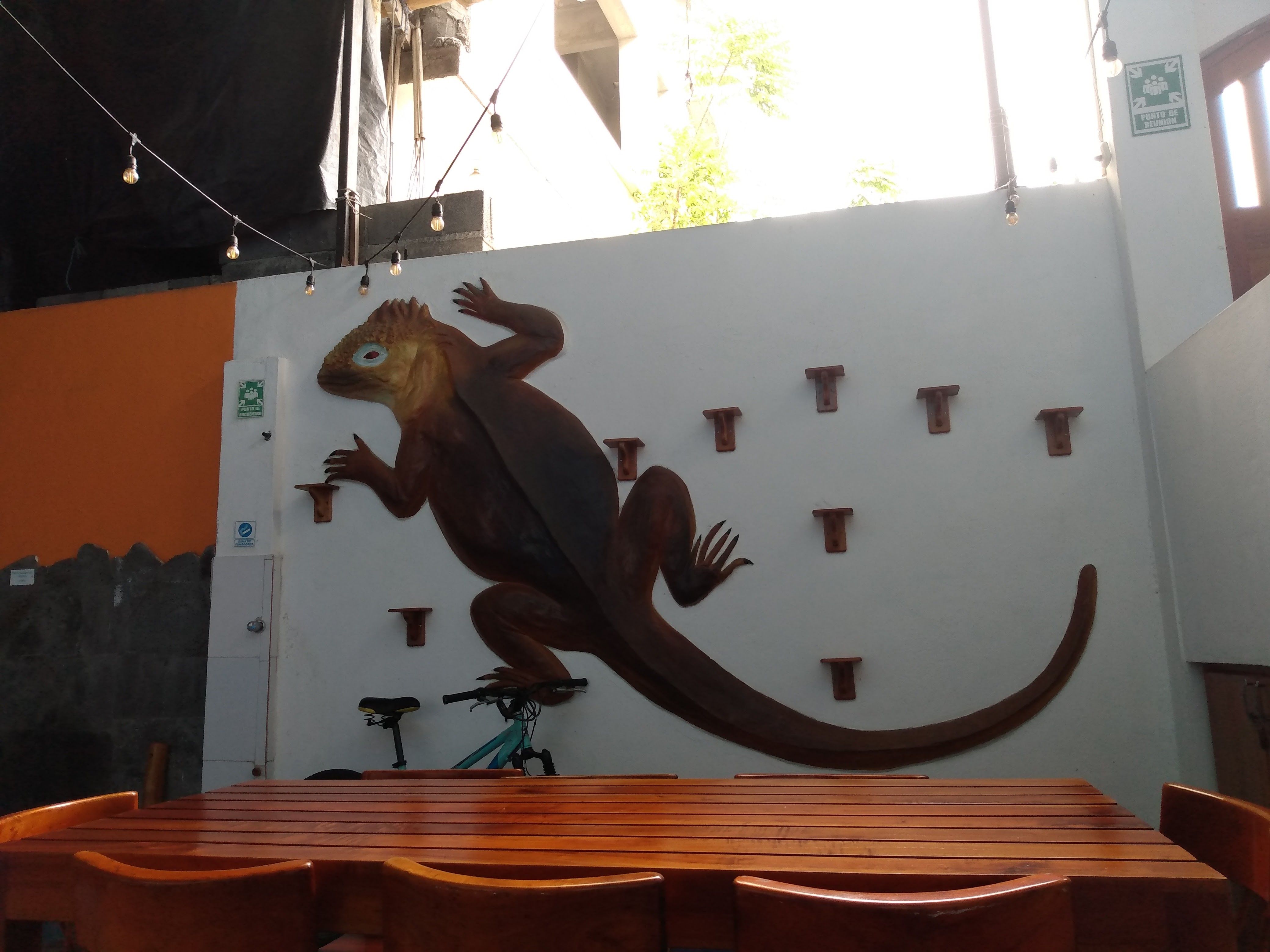
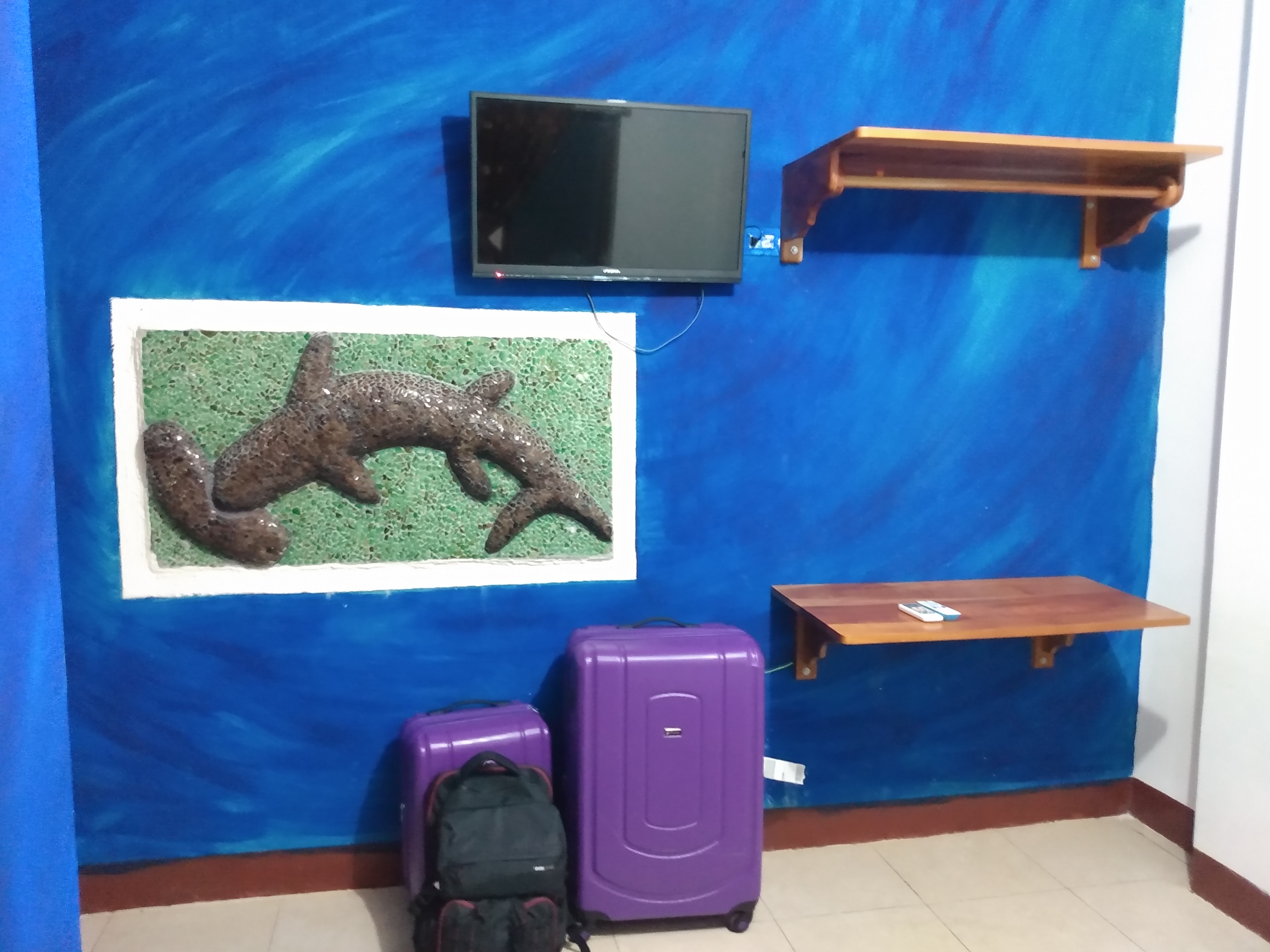
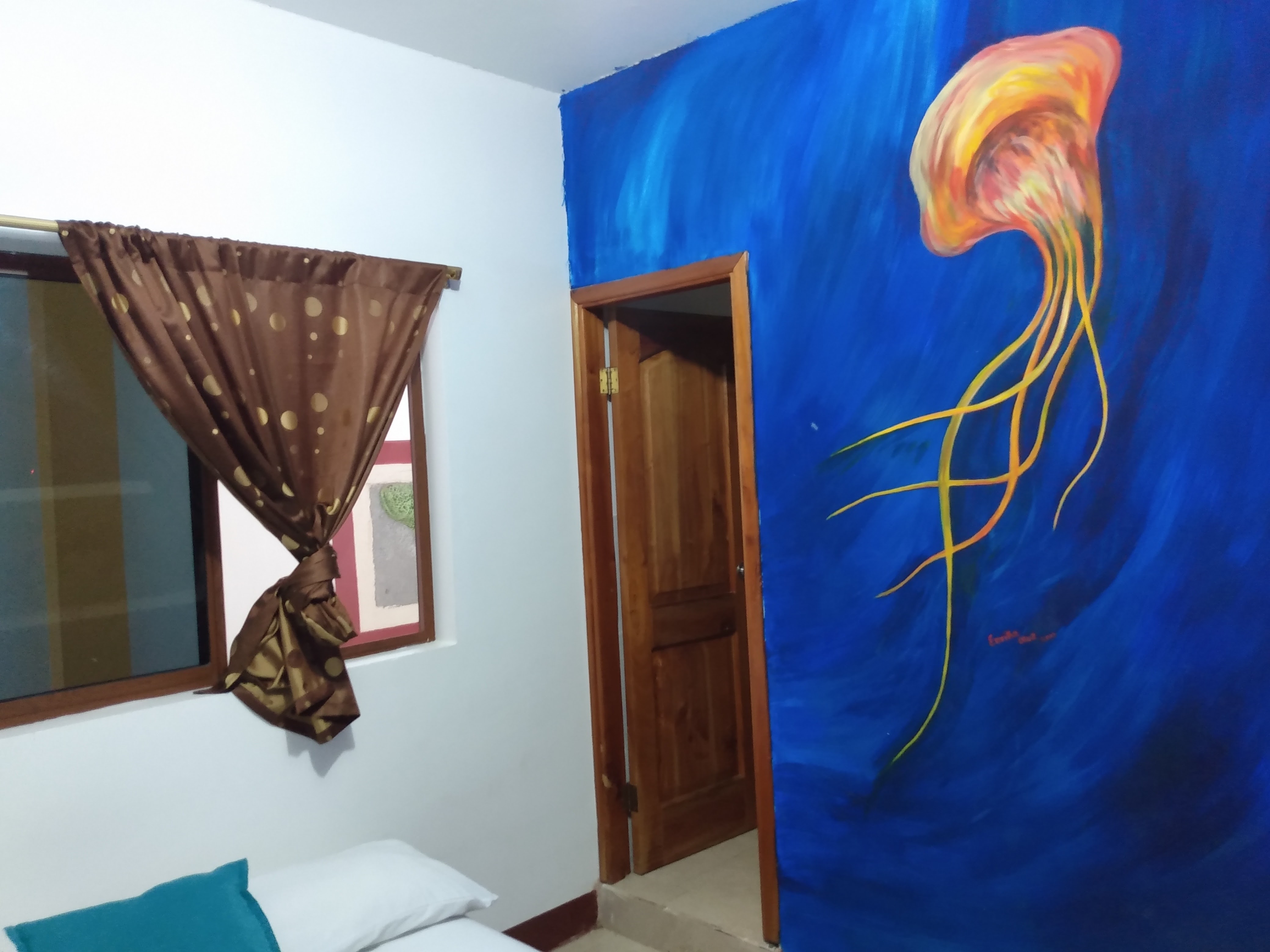
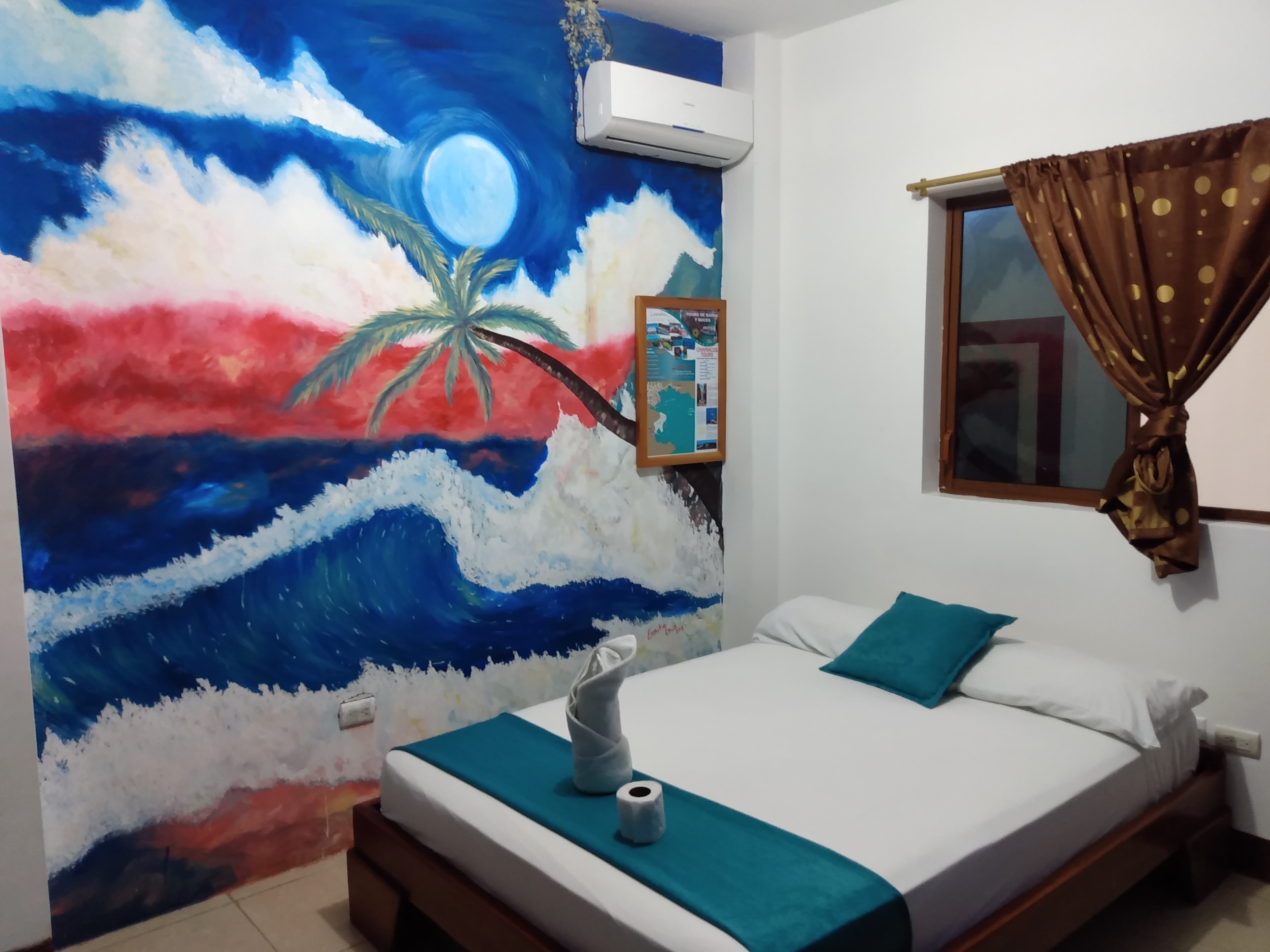
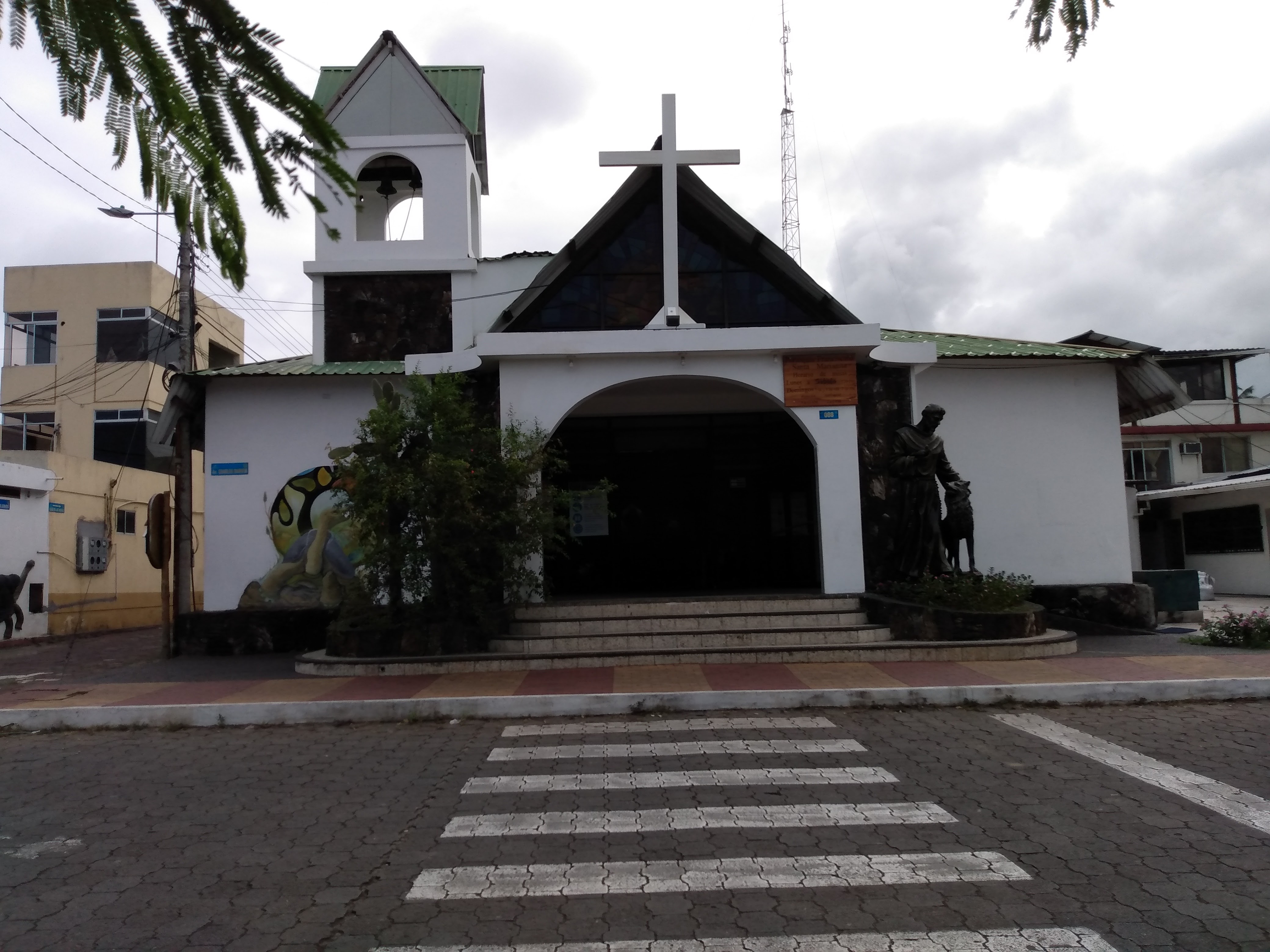
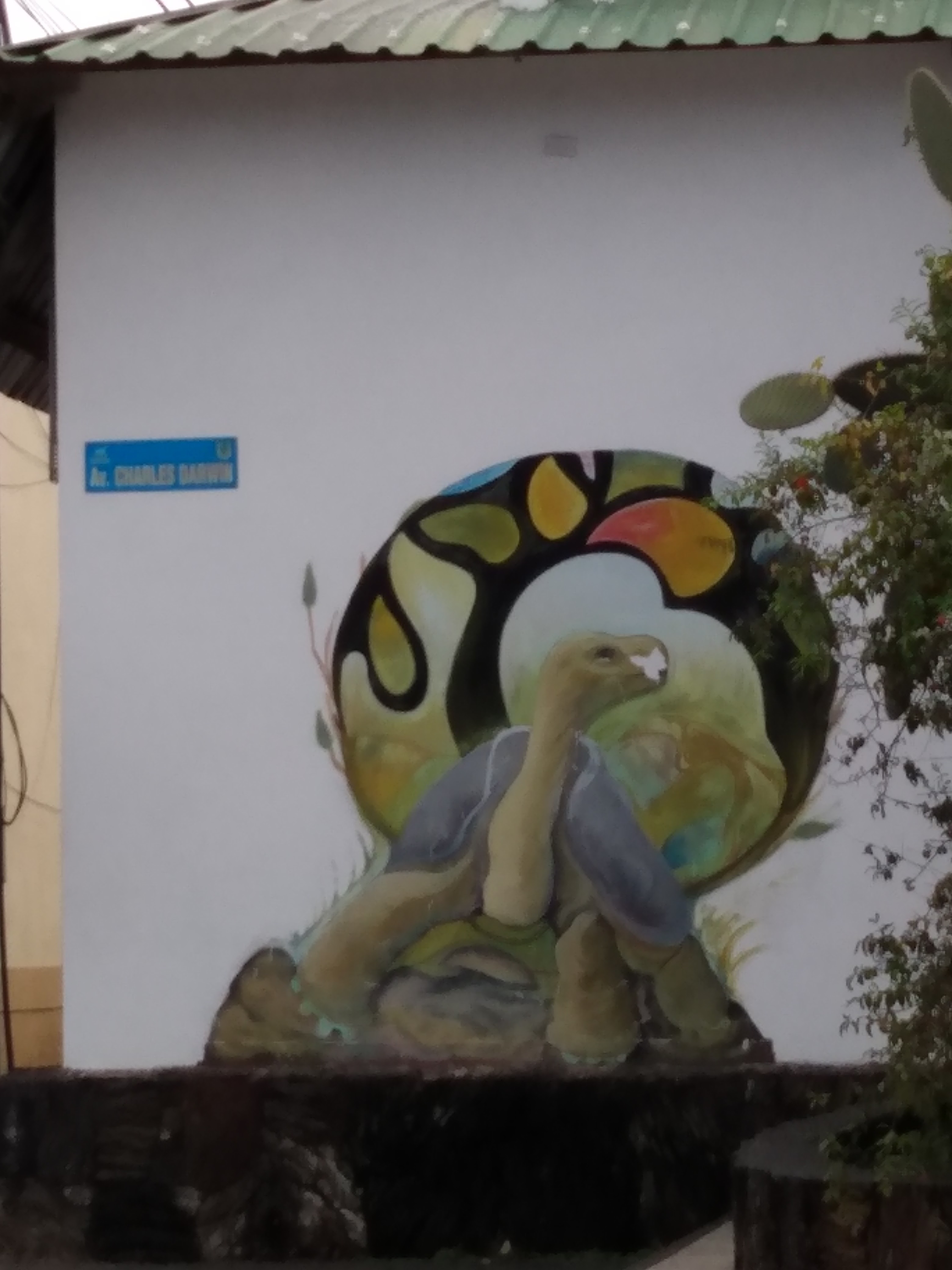
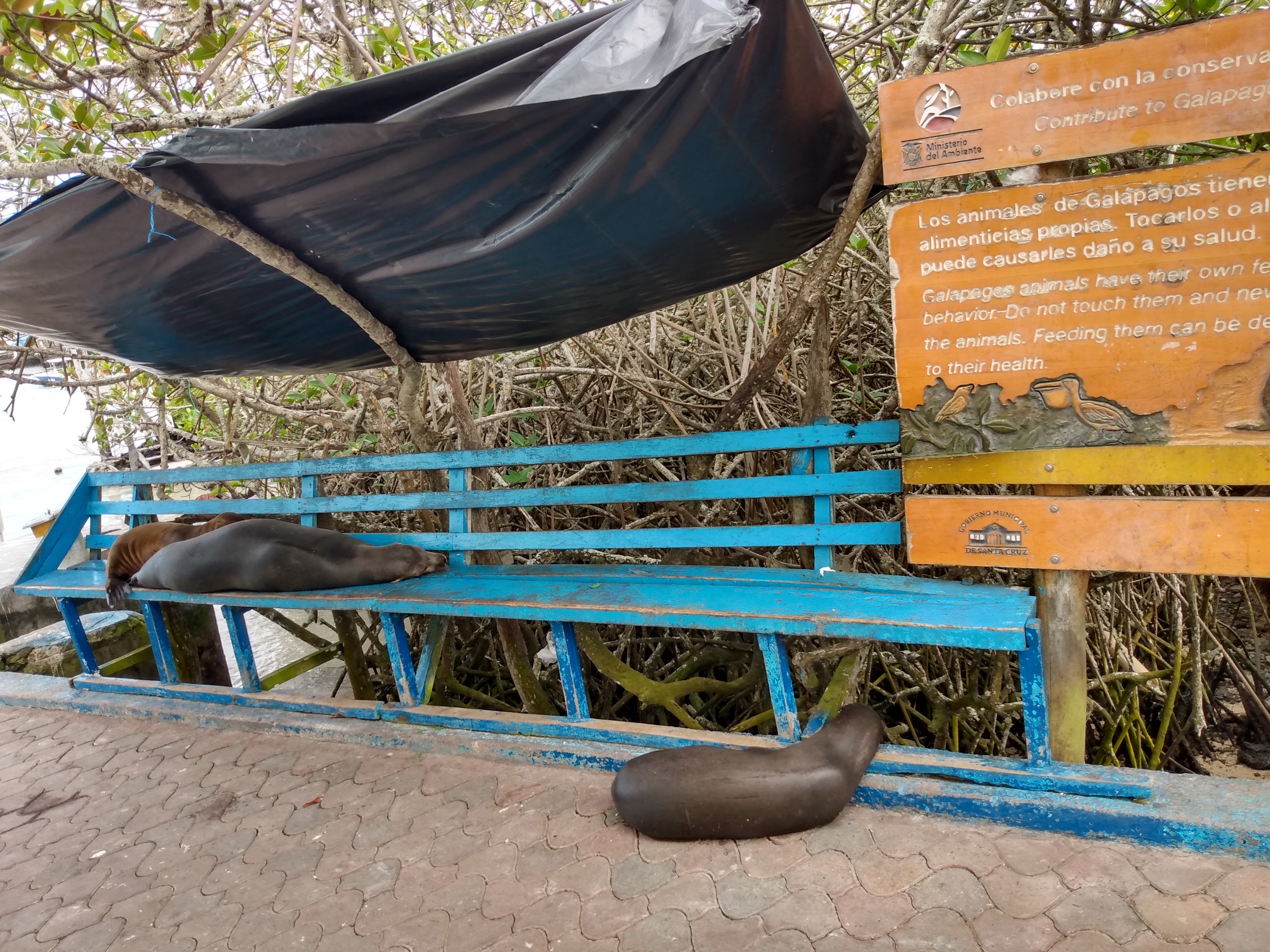
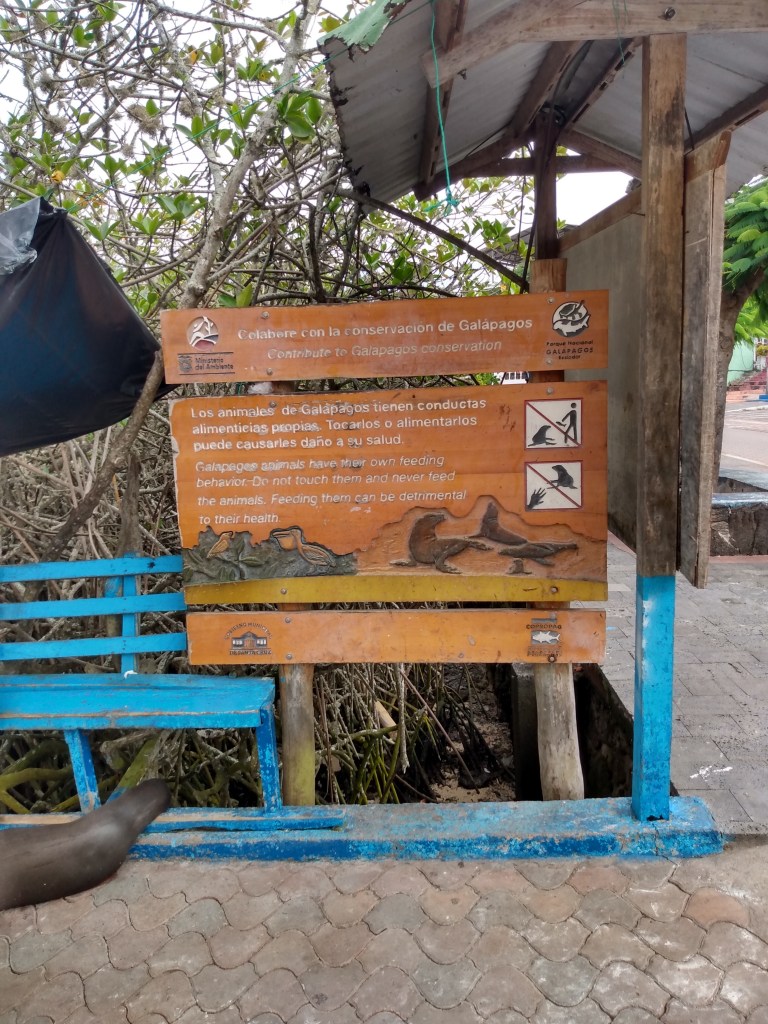
Other sights that are surprising to me (though probably shouldn’t be) include multiple churches, including one across the street from where the bus drops us off in Puerto Ayora with a mural of a giant tortoise on its facade and a street sign that says “Av. Charles Darwin”! From there I walk ten minutes to my hostel on the edge of town, El Pinzón, which is conveniently (for me) situated about midway between the city center and the Charles Darwin Research Station, which is first on my itinerary of places to visit here. But tonight I’m going to get settled in and try to process everything I’ve seen…there’s far too much to have taken in on my first pass through both the island and the town, but I’ll have plenty of time to revisit and further explore both. Along the way I see sea lions lounging on benches by a pier where a fresh seafood catch is prepared and sold every day, and marine iguanas sunning themselves on the sidewalks.
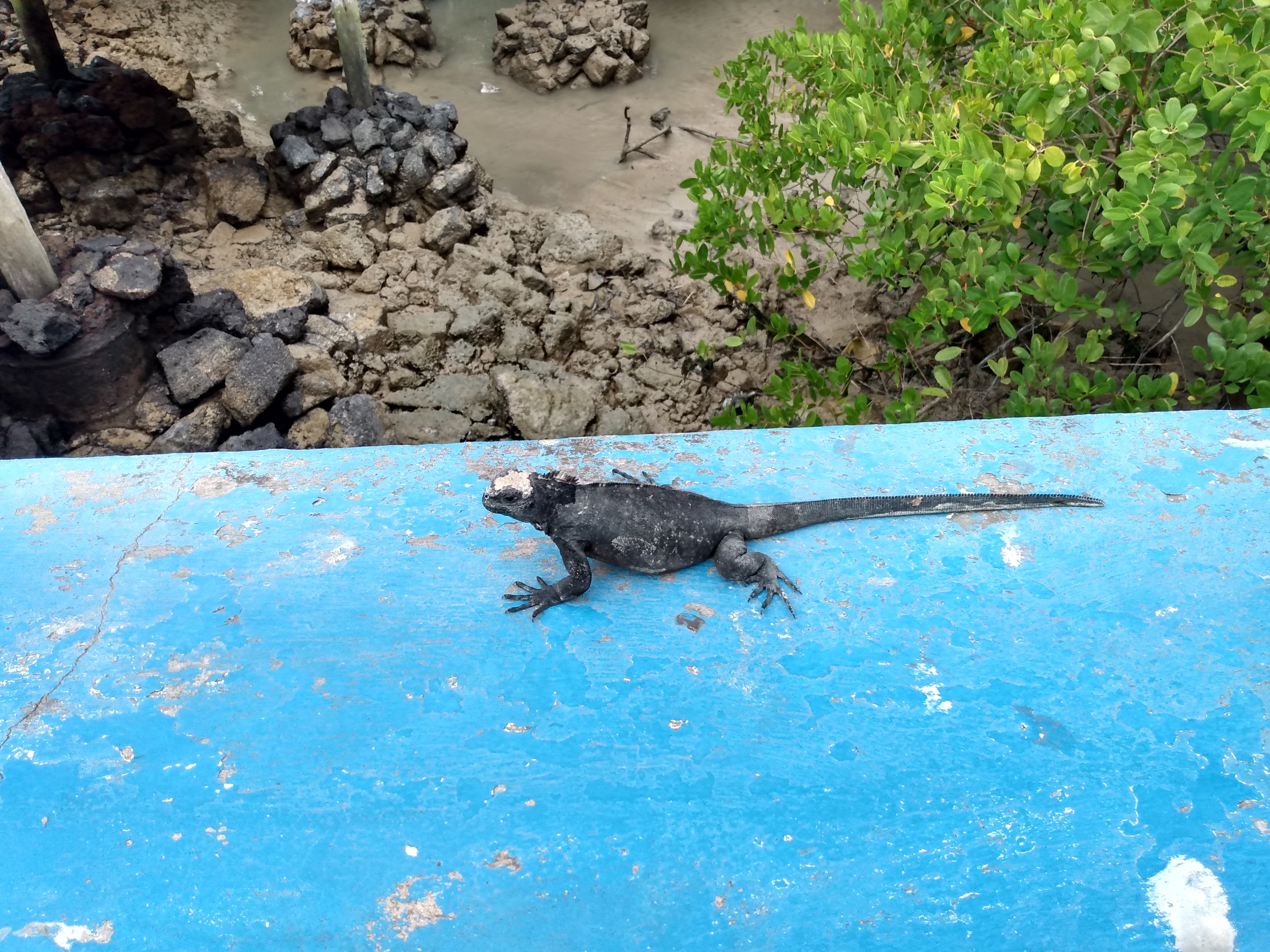
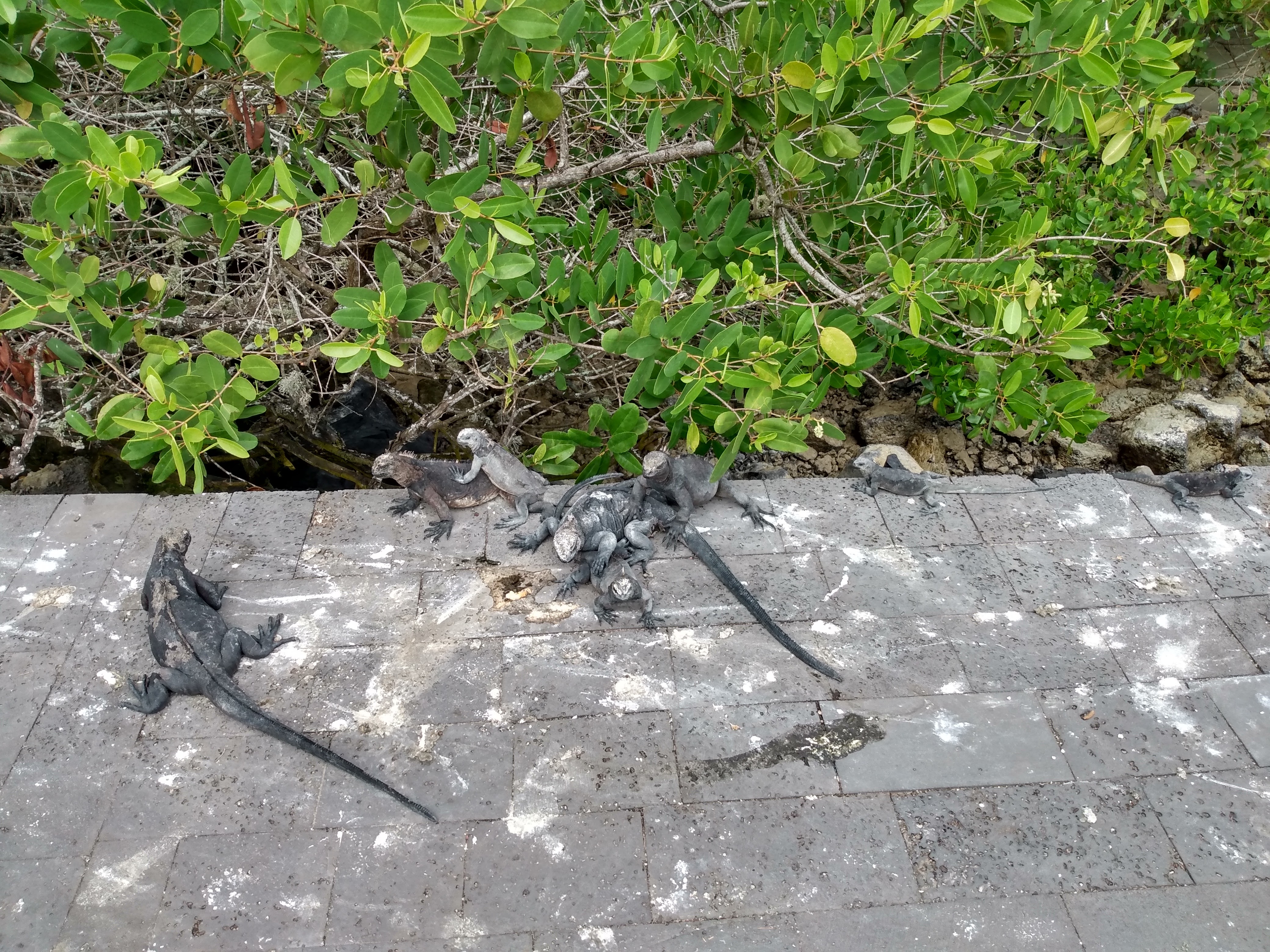
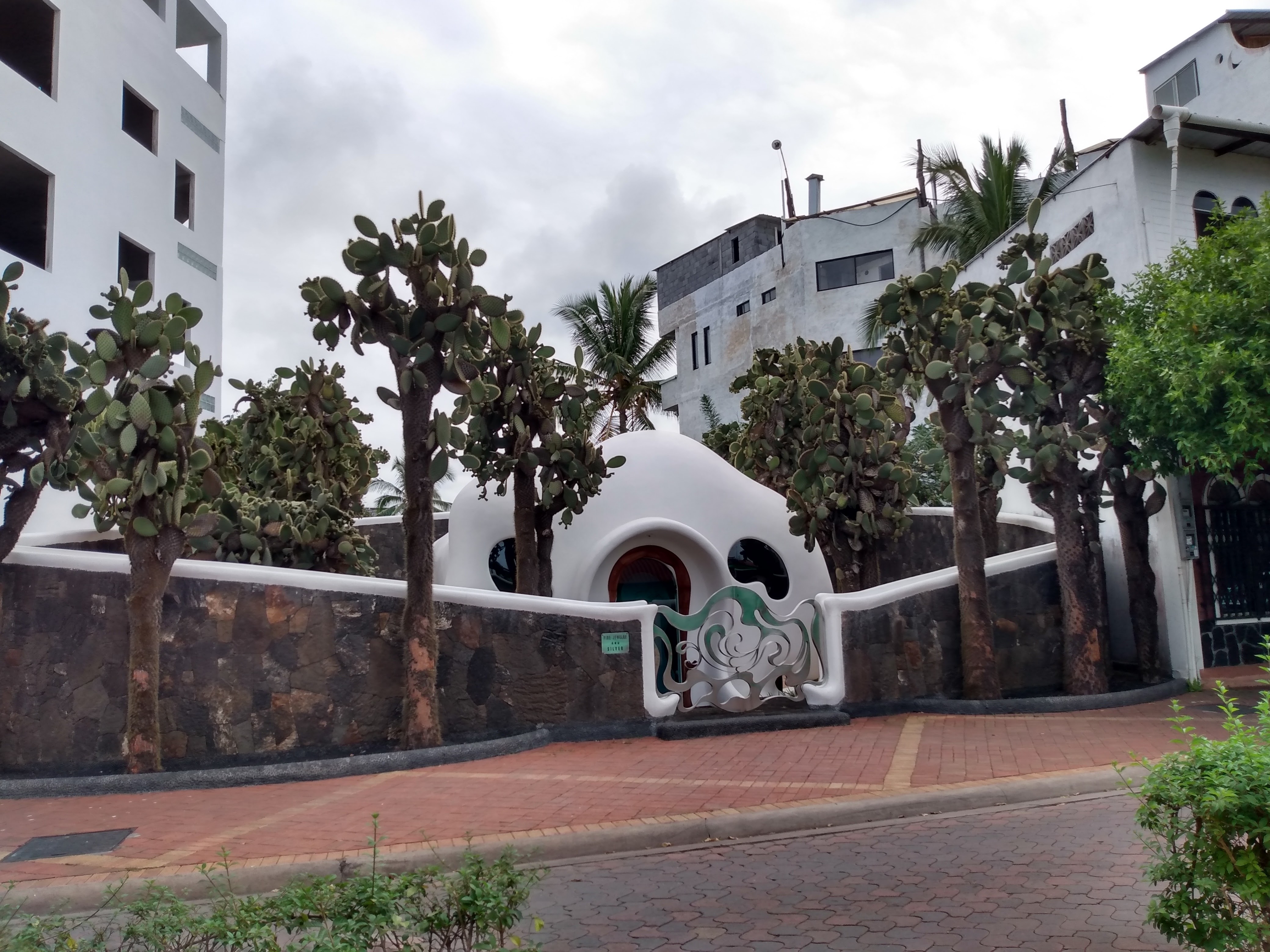
For now, my first impressions include being blown away by how completely pervasive Darwin’s presence is here—there are images of and quotations by him, or even just his name, almost everywhere you look—and generally that this place is nothing like what I expected, and beyond anything I could have possibly imagined…and my expectations were ridiculously high! And I’ve only scratched the surface. Even in two months I won’t be able to get enough of this place. It really is my idea of Paradise, and after just a few hours I already know I want to live here…but as I’ll soon find out, that’s not bloody likely!
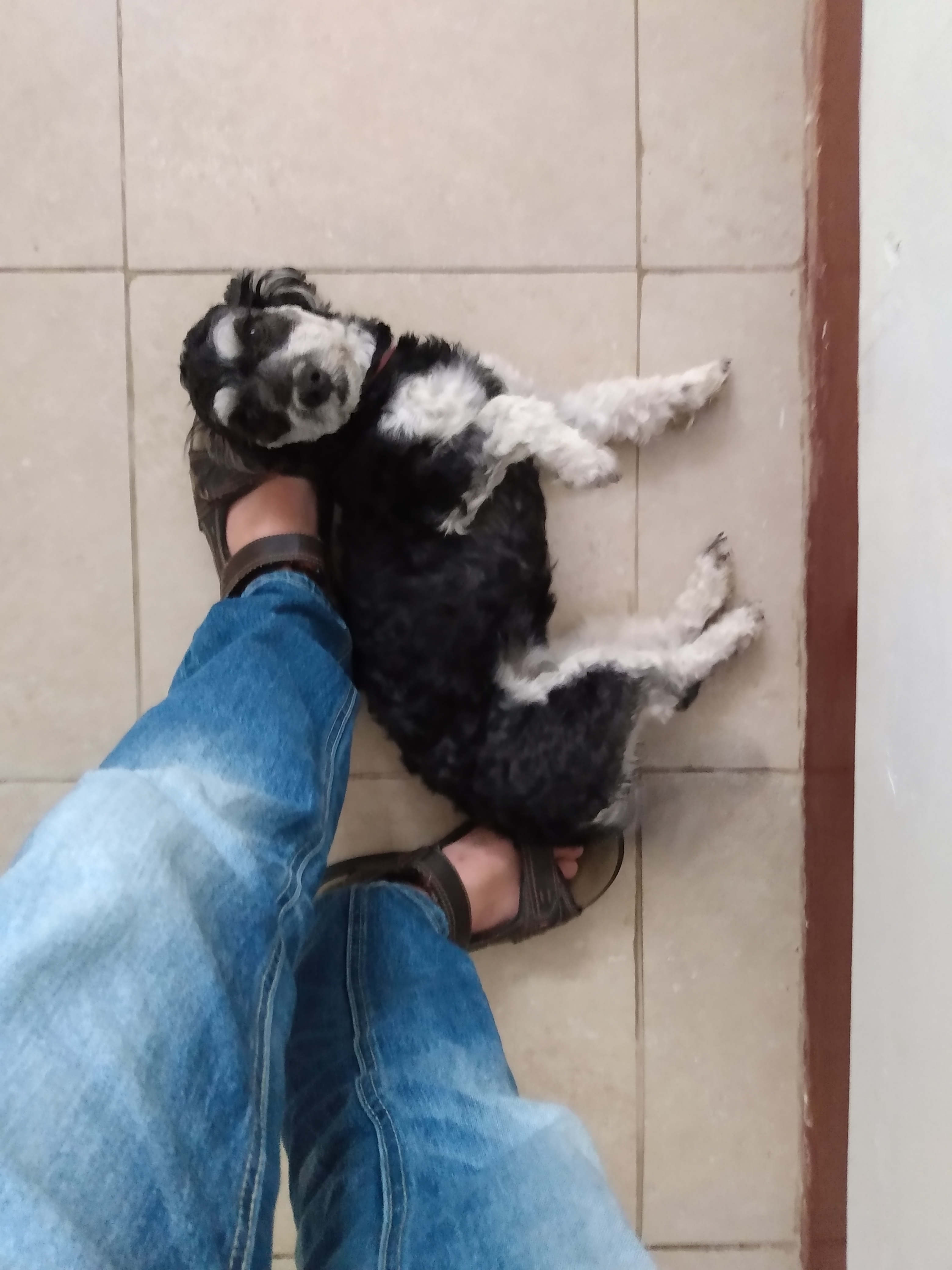
Oh, and the internet situation, as it turns out, is somewhat flaky…my first Zoom meeting works great (I think I’m pretty much the only one using the hostel WiFi at this point), but a couple of hours later the second one barely works at all. But the hostel does have an adorable dog named Corazón! 🧡