One of the most important and greatest work of science ever written
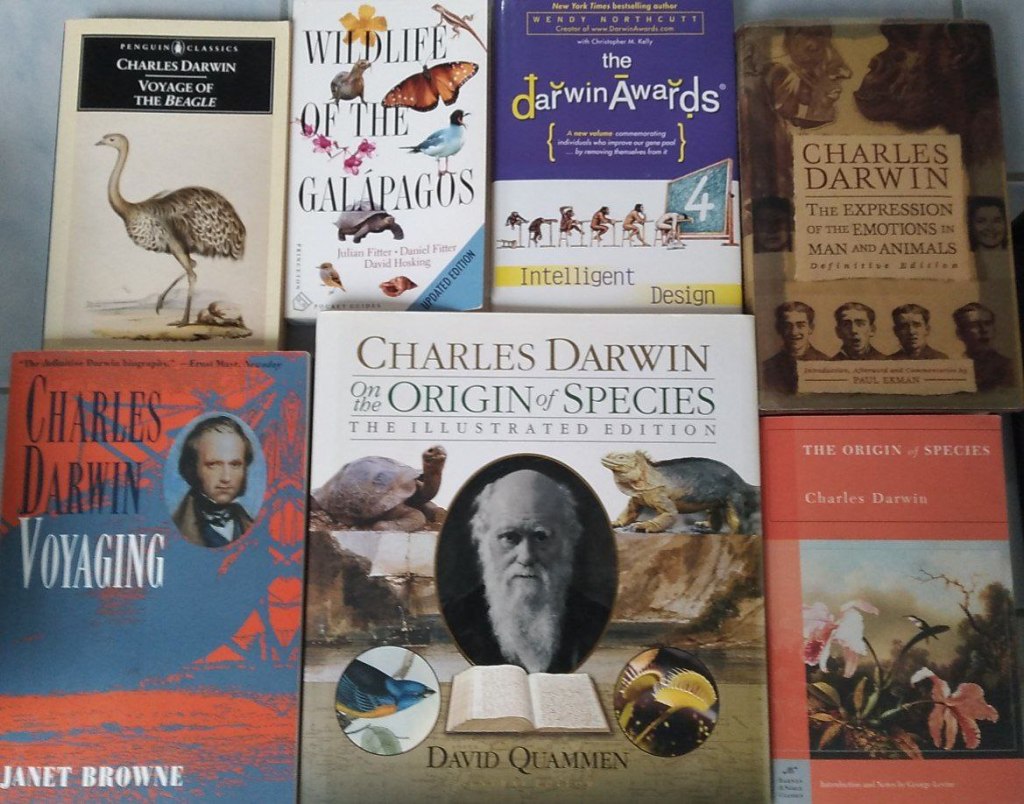
Review of the Barnes & Noble Classics edition of On the Origin of Species by Means of Natural Selection, or the Preservation of Favoured Races in the Struggle for Life, based on the first edition of 1859. Written for LibraryThing, September 2009; later copied to Goodreads, and posted to Amazon on 16 June 2013 under the headline above. Five stars.
To begin with, a note on the edition. This Barnes & Noble Classics series version is based on the first edition of The Origin of Species, which is actually nice for a couple of reasons. First, it allows the reader to experience the book as it originally appeared. This is not only interesting historically, but a nearly unmitigated virtue because of the second reason: The core content of the book remained essentially the same throughout the later revisions Darwin made in his lifetime, but such changes as he did make were for the most part unnecessary or even (in retrospect) unfortunate—mainly minor concessions to skeptics (religious and otherwise) and to the Lamarckian theory of evolution (as opposed to natural selection as the basic mechanism driving evolutionary change).
That said, there are several things to say about the book itself. First, it is extremely readable. Modern audiences (especially those educated in the American government schools, which almost certainly failed to introduce them to this material) might be intimidated by the prospect of tackling a somewhat technical scientific volume of this size written a century and a half ago. Those who attempt it, however, will be pleasantly surprised to find that Darwin’s presentation is extremely clear and intelligible, at times even beautiful. This admirable writing style is in large part due to his scientific method, which leads me to the book’s next great virtue.
Darwin’s approach is primarily inductive—that is, he was not some armchair philosopher abstractly theorizing off in an ivory tower somewhere, as one might suspect from the photograph of him as a bearded old man with which we are usually presented. In other words, evolution is not “just a theory,” precisely because Darwin was not just a theorist. Rather, Darwin gathered massive amounts of evidence on his Beagle voyage, and continued to accumulate ever more (with the help of his scientific colleagues in various related disciplines) for decades before he felt ready to publish his theory (and he still felt rushed into it). (Indeed, for anyone interested in the philosophy of science, or in epistemology in general, On the Origin of Species should be the textbook case of scientific induction.1) Darwin then presents all of this evidence to us piece by piece, building up his case from the ground, as it were, and in effect recreating his own line of thinking for his reader, making it incredibly easy to follow his case.
Which brings us to the third point: What kinds of evidence does Darwin draw on? Intriguingly, Darwin did not begin his career as a biologist aiming to solve the species question. He boarded the Beagle as a brilliant amateur natural scientist generally with an inclination toward geology. Perhaps this is why he was able to draw so widely on various fields in making his case for evolution when that question did become his main interest. From Lyell’s theories and his own geological observations, Darwin concluded that the period of time available actually allowed for a very (previously unthinkably) slow process of evolution. From this geological perspective, he naturally was able to look at various pieces of evidence more directly bearing on the species question, such as the fossil record and (perhaps even more importantly) the geographical distribution of species. After the Beagle voyage, he was able to conduct experiments in many other areas (and correspond with colleagues about the results of their experiments), including artificial selection (Darwin’s pigeons being the most famous example of this) which became important as an analogy for the process of natural selection; the means of the geographical distribution and isolation of species (including seeing whether seeds can germinate after extended periods of submersion in salt water or passing through the digestive tracts of birds); and even the sex lives of barnacles. All of these experiments are described at some length in The Origin of Species.
But Darwin, ever the scientist, was in fact cautious not to overstep the limits of what he could prove. The Origin of Species contains an excellent chapter anticipating and answering possible objections to his theory, and acknowledging its shortcomings. For instance, Darwin acknowledges that the fossil record at the time did not tend to show gradual progression from one species to another, and offers an explanation as to why the fossil record might be so incomplete. He also acknowledges that while he found the evidence for evolution by means of natural selection to be overwhelming, he did not know the actual physical, biological mechanism by which this takes place (as genes had not been discovered and the discipline of genetics created at that time), but he does briefly mention a hypothesis that was actually sort of on the right track. In fact, in all of these weak areas, subsequent history has borne Darwin and his theory out remarkably well.
And finally, in addition to being a masterpiece of scientific thought, The Origin of Species is also a work of, at times, almost poetic beauty, and deserves praise for its literary merit. After presenting or indicating all the evidence in a specific area throughout each section, Darwin ends each chapter by summing it up in an eloquent statement naming the general principle to be derived from this vast array of specific evidence, often employing an apt and evocative metaphor. The most famous of these passages is of course the one with which he concludes the book:
“Thus, from the war of nature, from famine and death, the most exalted object which we are capable of conceiving, namely the production of the higher animals, directly follows. There is grandeur in this view of life, with its several powers, having been originally breathed into a few forms or into one; and that, whilst this planet has gone cycling on according to the fixed law of gravity, from so simple a beginning endless forms most beautiful and most wonderful have been, and are being, evolved.”
You cannot legitimately consider yourself a well-educated person if you haven’t read this wonderful book, and yet a shockingly small percentage of Americans (including even those who claim to believe in evolution) have read it. But you will find that to do so is not a chore, but one of life’s great pleasures.
1. John Stuart Mill agreed, with an important qualification: In a note added to the fifth edition of A System of Logic (1862; Book III, ch. XIV, §5), he called Darwin’s work “another unimpeachable example of a legitimate hypothesis,” observed that Darwin had never pretended his doctrine was proved, and added that Darwin was bound “not by the rules of Induction, but by those of Hypothesis”—rules which, Mill said, “have seldom been more completely fulfilled.” In Mill’s terms, then, the Origin is the model of how a hypothesis ought to be framed and supported; the inductive case, he thought, was still being made. ↩

