From the travel notebook, after the cruise.
My first night back from the cruise I stay with a local Couchsurfing host. I meet him at his friend’s place where he is watching the Ecuador vs. Brasil football match. It ends in a draw, which means Ecuador will advance to the next round of the tournament. Afterward his nephew arrives with my host’s truck, and his nephew’s girlfriend sends me a link to take a tourist profile survey while we’re on our way to drop them off. Then we head back to my host’s place a bit outside of Puerto Ayora in a small industrial park, where I crash early.
In the morning over breakfast, my host explains to me the situation of the local people from his perspective. While Galápagos is by far the wealthiest province of Ecuador on paper, it faces significant problems. The base salary for people on the continent is around $400 a month, while here in the islands it is $800. There is relatively little crime here, compared with the mainland; in Galápagos, your person and possessions are quite safe. So many Ecuadorians (as well as foreigners) want to come here, and while there was a law passed some years ago to limit immigration, the population is still growing through marriage and birth (albeit not nearly as rapidly as over the prior few decades).
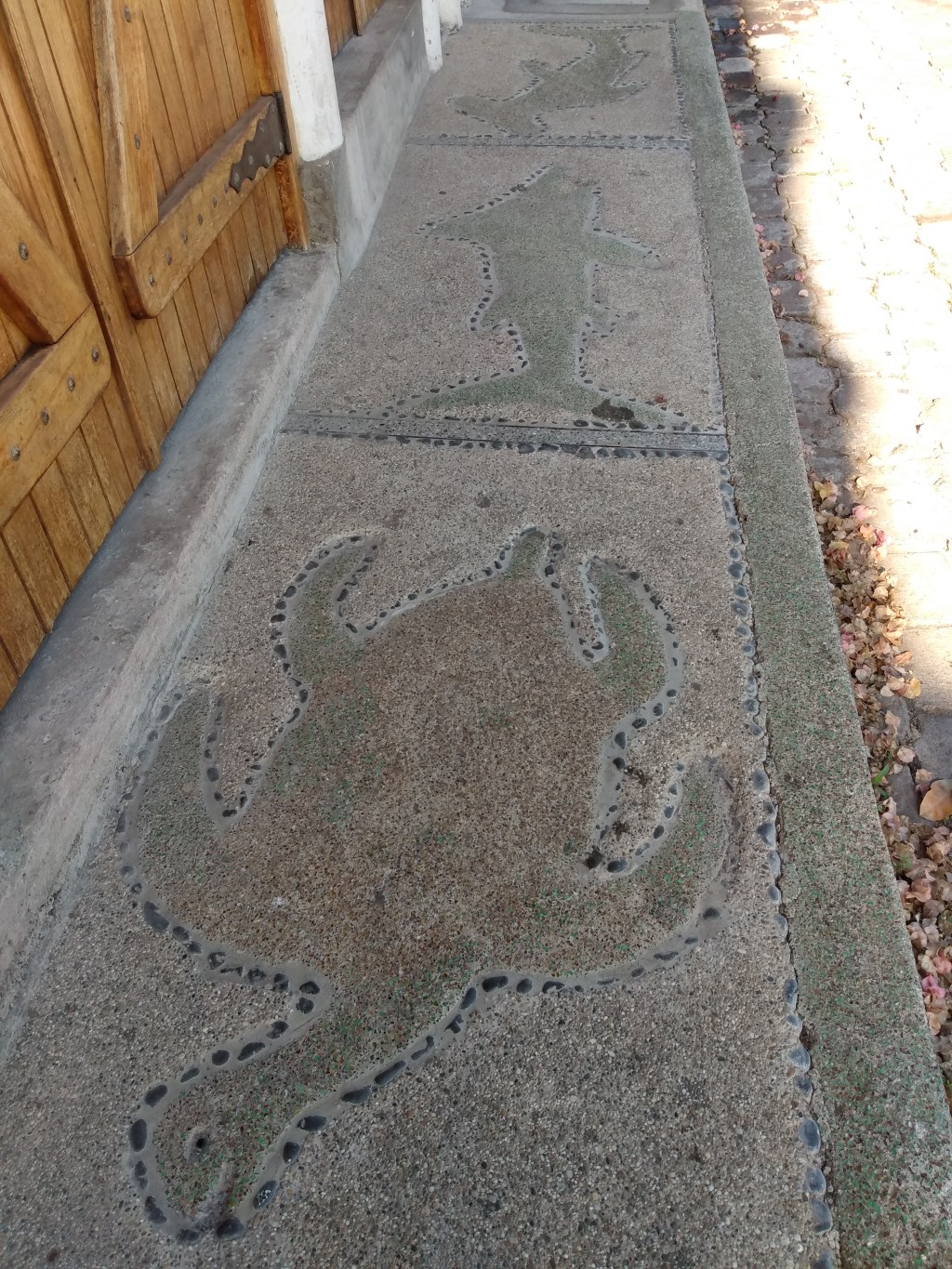
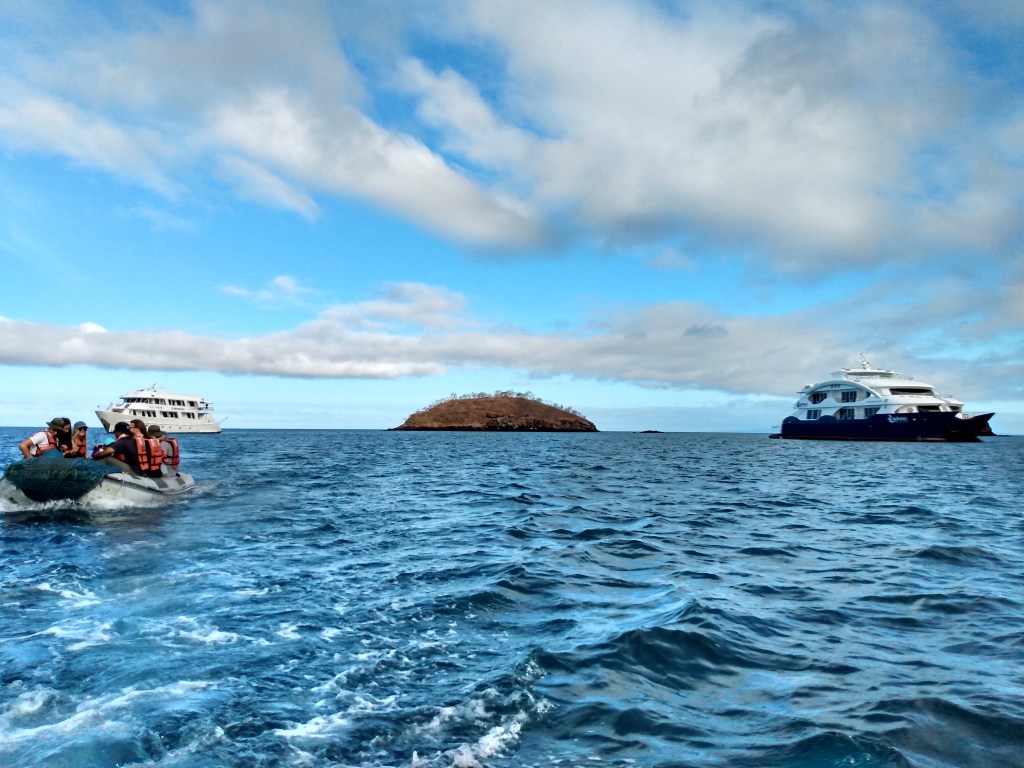
And while the tourism industry continues to grow and contributes to the economy of the islands to some extent (particularly more locally-based tourism in which visitors spend time in town and patronize locally-owned hotels, restaurants, souvenir shops, &c.), much of it does not. The cruise ships that many tourists use as their entire experience of the islands require a major upfront investment of capital as well as a lot of bureaucratic red tape for regulatory compliance and things which very few locals are in a position to be able to afford, so most of the larger cruise ships are owned and operated by foreigners or people from mainland Ecuador with political connections. So much of the revenue generated by tourism (by far the largest sector of the local economy) goes to non-local investors and is not reinvested in the islands. The mainland government also generates large amounts of revenue from Galápagos—the national park fee alone, at $100 per visitor with around 300,000 visitors per year (pre-CoViD), generated around $30 million per year over the past decade—not all of which is necessarily reinvested proportionally into the islands. (Like much of the rest of Ecuador, there still isn’t even potable drinking water here.)
Additionally, local farmers face threats posed by invasive species brought to the islands, including plants such as blackberry and guava trees, as well as animals like rats and fire ants. There have been some efforts by conservation groups to eliminate or control some of these invasive species, which have had a major negative impact on the native wildlife (for instance by competing for scarce resources or destroying the eggs and young of local species), but many locals dislike these foundations because they often fail to take the needs and input of the local people into account. For instance, a major effort was made to eliminate invasive goats from one island, but it turned out that since their introduction decades earlier the goats had already become part of the local ecosystem, and their elimination led to the more rapid crowding out of native plant species by invasive plants, which the goats were actually helping to control. Also, locals helped control the goat population through hunting and sold the meat, so their elimination removed this source of livelihood. And while conservationist groups try to control invasive species in the 97% of the islands that is protected national park area, they typically do nothing for the local farmers, who have to try to control the invasive species on their own land themselves, which is costly. If they don’t, plants like blackberry will rapidly take over their farm, and if the neighboring farm doesn’t, it will rapidly spread back (and ultimately back into the protected areas as well).
Education is another serious problem. There are now five high schools on Santa Cruz (a generation or two ago there was only one), but the students are taught little about the local history and environment. (Many locals that I’ve spoken to know next to nothing about Charles Darwin, let alone the science of ecology that he founded.) And there is no university, so kids who grow up here must go to the mainland for higher education, which for most families is cost prohibitive. Between travel from the islands to the continent multiple times a year, tuition, books, etc., the cost of a college education for a student from Galápagos might run around $1,500 per month, nearly double the typical income here, so only the Galápagos rich can really afford higher education for their kids.
In the long run, this combination of factors (more people moving from the mainland, poor primary and practically non-existent secondary education, most of the money from foundations as well as tourism not contributing to the local economy, etc.) may contribute to relative increases in poverty and crime as well as environmental degradation and lead to the destruction of many of the valuable features of the islands that make them attractive in the first place. But to prevent this from happening and to protect and improve the quality of life here, it will be necessary for outside investors and conservation groups to do a much better job of taking these issues into consideration.
But in the end, these problems are not unique to Galápagos. Rather, they are more general issues facing many places that have come to rely on ecotourism as the basis of their economy due to the uniqueness of their wildlife (such as the African reserves in countries like Kenya and Uganda, or the orangutan habitats in Borneo in Malaysia), with a combination of extra-local economic development and environmental conservation efforts neither of which adequately take into account the needs of the local people, in some cases displacing them and destroying their livelihoods and way of life. (For more on this, read Michael Shellenberger’s book Apocalypse Never.)
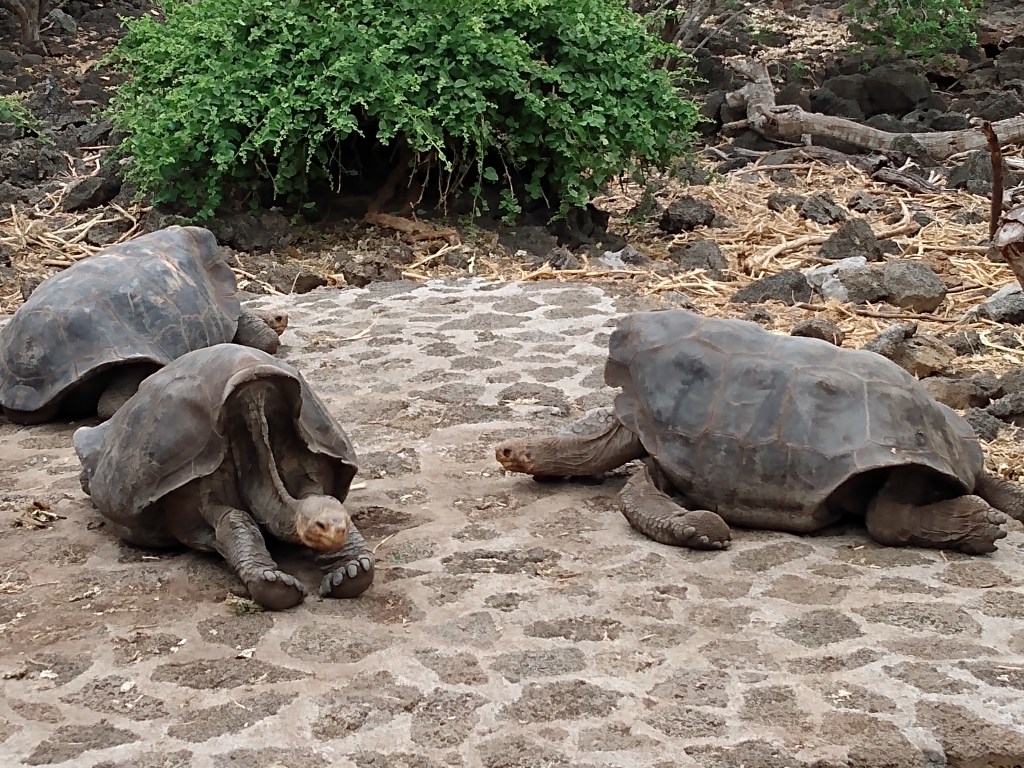
But Galápagos is unique, and so are the people who live here. The cruise showed me the Galápagos of the brochures and nature documentaries, the wonderful variety of both marine and terrestrial life with its sea lions and iguanas and giant tortoises and so much more, and it was truly incredible, even life-changing. Then one breakfast in an industrial park outside Puerto Ayora showed me the one the islanders live in… My host spent an hour telling me everything wrong with the islands, and yet he isn’t going anywhere, and I can understand why. Both of these sides of Galápagos are real, and important. But the people most affected by what happens here often get the least say in it. Any plan for the islands that leaves them out isn’t conservation… It’s just another form of extraction. We should do what we can to keep it a uniquely rich environment, for residents and visitors alike.

